

Content strategy & growth
A media project built around the moment people wanted an explanation.
News traveled quickly. Useful analysis often arrived later. I built Elkhabar Bewodooh around that gap, owning strategy, content and distribution while using AI for research and to build filming and publishing tools. It passed 3,000,000 views in under four months.
3M+
Views across platforms
In under four months.
Reaching beyond the people already following
- Facebook followers
- 17K
- Saved per active publishing day
- 4+ hrs
- Distribution platforms
- 6
At a glance
- Project
- An independent media venture I founded and ran
- Period
- Audience growth in under four months
- Starting point
- A new audience, supported by an initial paid campaign
- Core platforms
- Facebook, TikTok and YouTube
- Distribution expansion
- 6 platforms, adding Instagram, X and Threads
- My responsibility
- Opportunity research, strategy, scripts, filming, publishing, community, analysis and automation
- Metric
- Result
- Spend
- EGP 877.19
- Follows or likes
- 2,605
- Cost per result
- EGP 0.34
- Metric
- Result
- Views
- 1,339,533
- One-minute views
- 198,956
- Cumulative watch time
- 369 days
- Views from non-followers
- 94.9%
Timing was part of the editorial proposition
Studying broadcasters and independent creators revealed a useful opening: the time between a story breaking and an explanation reaching the audience.
Video production could consume much of that window. I developed a format that allowed analysis to reach viewers earlier, informed by the audience’s response to direct presentation and competitors’ live formats.
The topic and angle mattered. So did how quickly a considered explanation could be produced and distributed.
I built the production process around the opportunity
I chose a filming format that required less editing and developed an AI-assisted tool to control the phone from my computer, pause and resume recording, and transfer the footage.
I then built a zero-cost publishing and scheduling tool for distribution across 6 platforms, without opening each platform separately or paying for a social media management service. Time saved in filming would have had less value if the upload and publishing process remained a bottleneck.
On active publishing days, I averaged six videos. Publishing automation saved more than 4 hours of daily work, helping me run the project alongside client engagements.
AI also supported news collection, analysis, topic selection and writing. I remained responsible for editorial choices, the angle and what was published.
Paid seeding established the starting audience
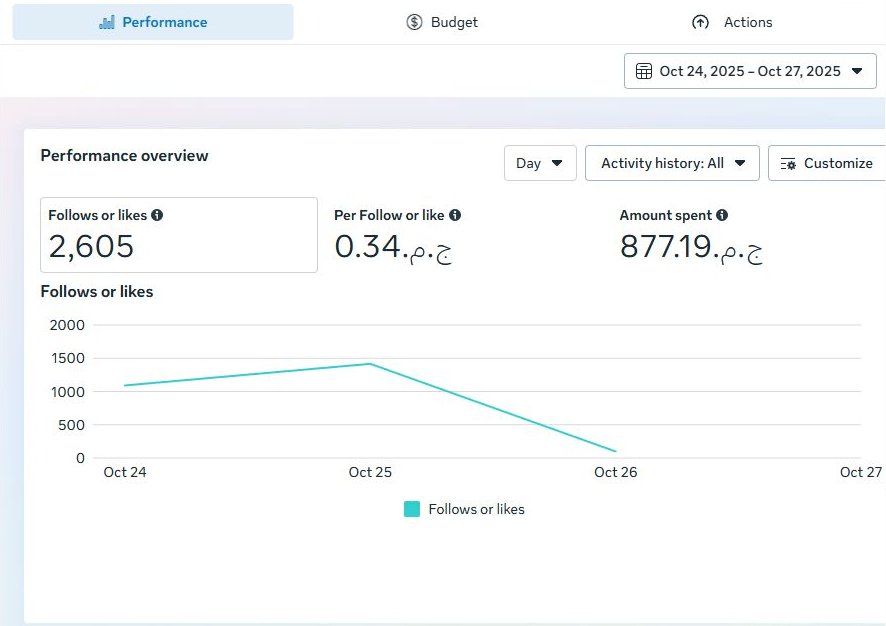
The initial Facebook campaign ran from October 24–27, 2025:
| Metric | Result |
|---|---|
| Spend | EGP 877.19 |
| Follows or likes | 2,605 |
| Cost per result | EGP 0.34 |
 View full image
Growth subsequently relied primarily on organic distribution. I used retention, watch time, shares, non-follower reach and follower acquisition to develop the topics, openings and formats.
A request to follow was getting in the way
In one experiment, I placed a follow-and-engage request immediately after the opening hook. My assumption was that curiosity about the story would keep people watching through it.
Retention showed viewers leaving at the interruption. I moved the request later in the video, or to the end, after the explanation had earned their attention.
That became part of how I tested the structure, alongside the opening, pace and treatment of the topic.
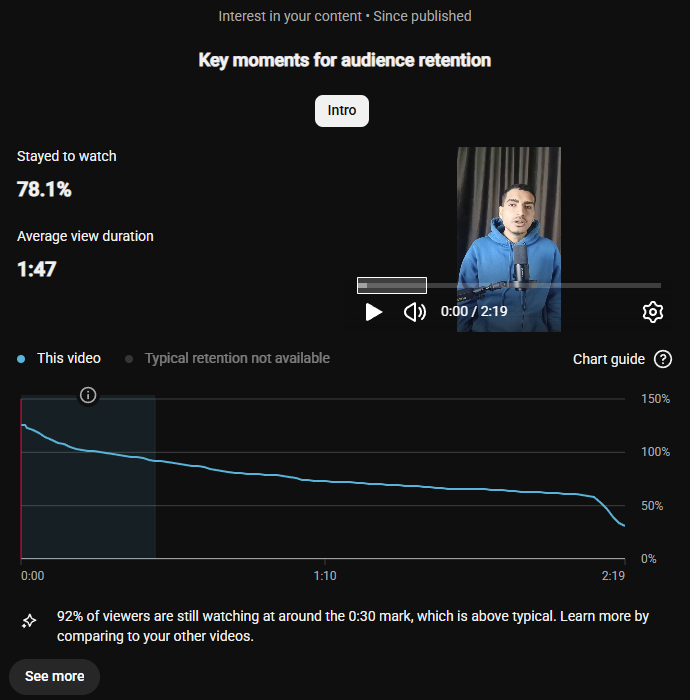
One 2:19 YouTube video recorded:
- 1:47 average view duration.
- 92% of viewers still watching at 30 seconds.
- 78.1% choosing to stay and watch.
 View full image
The audience extended beyond existing followers
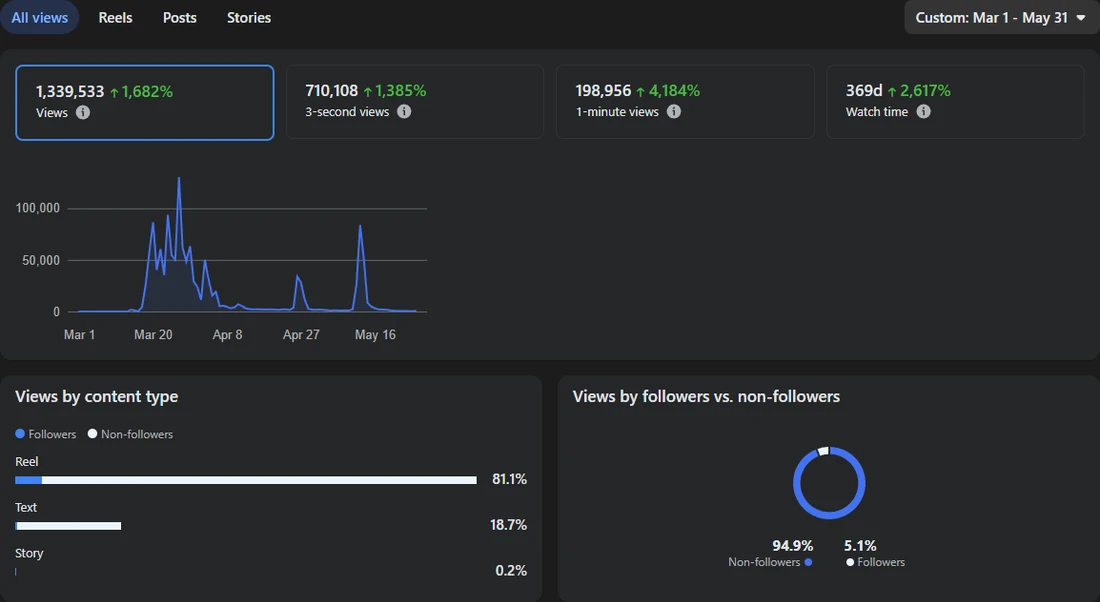
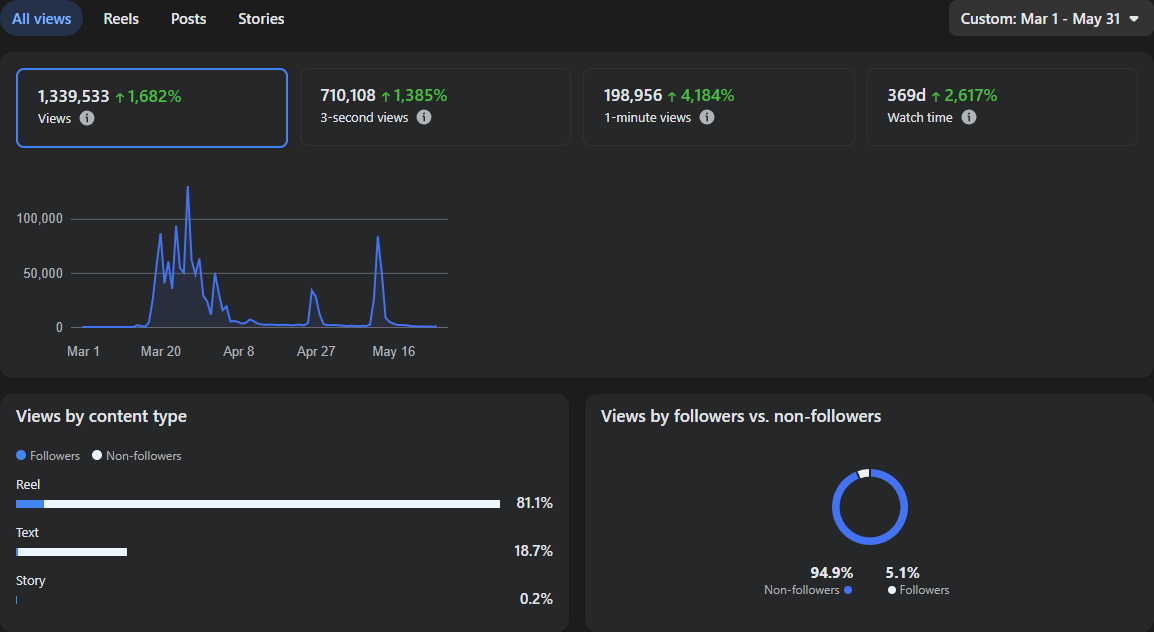
For March 1–May 31, 2026, Facebook recorded:
| Metric | Result |
|---|---|
| Views | 1,339,533 |
| One-minute views | 198,956 |
| Cumulative watch time | 369 days |
| Views from non-followers | 94.9% |
 View full image
The non-follower share helped assess whether the content was reaching new people. The Facebook audience eventually grew to 17,000 followers, and the page was accepted into Meta’s monetization program.
Other platforms showed audience response within their respective reporting windows:
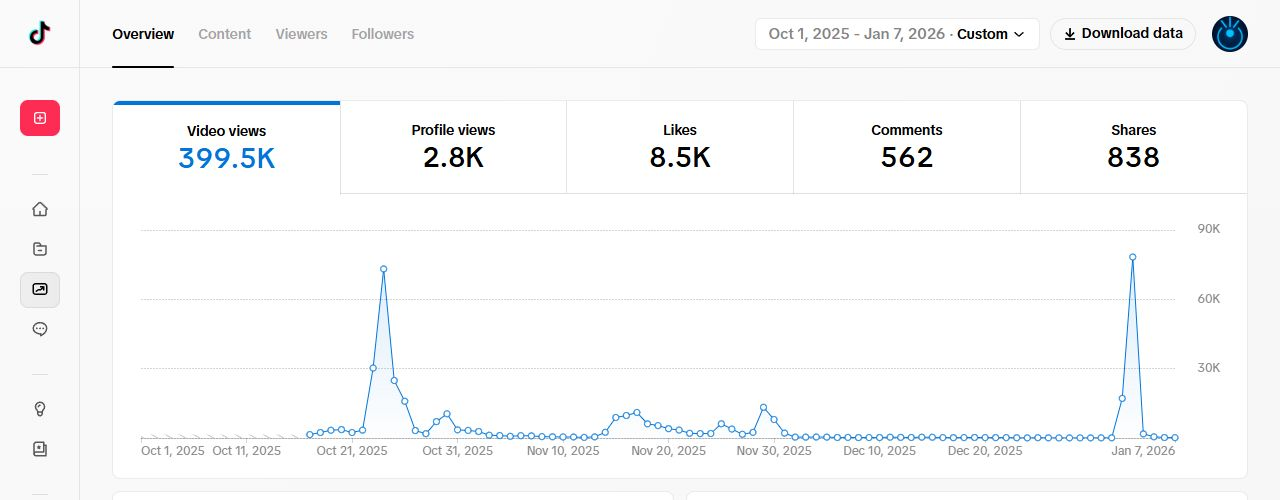
- TikTok, October 1, 2025–January 7, 2026: 399.5K video views, 8.5K likes and 838 shares.
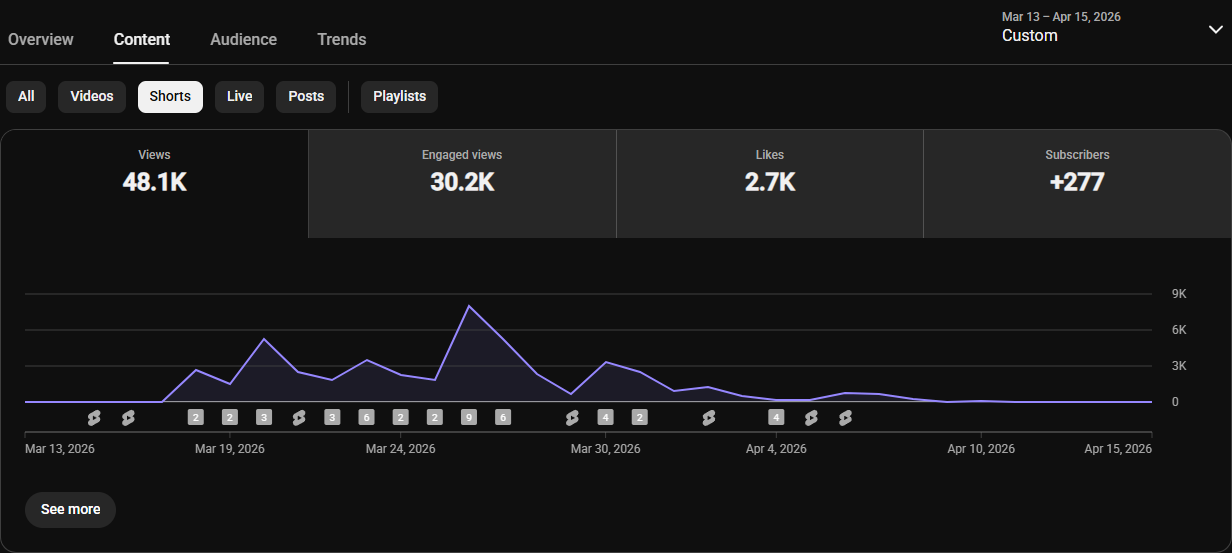
- YouTube Shorts, March 13–April 15, 2026: 48.1K views, 30.2K engaged views and 277 new subscribers.
 View full image
 View full image
Across the project’s publishing activity, the combined total exceeded 3,000,000 views across platforms.
What this project demonstrates
I identified an audience opportunity, built a content proposition around it, operated the production and distribution, and changed decisions when the response challenged my assumptions.
It also made the relationship between content and operations tangible. A faster format and less manual publishing gave me more room to research and test, while helping the explanation reach the audience when the story mattered.
From running the work myself to leading a team
On Youssef El Sherif’s project, I applied content strategy through a 5-person team, coordinating the content, accounts and distribution.