

Paid search & acquisition
Giving Zone10 a measurable way to reach people already searching.
I built a Google Search acquisition channel for a Riyadh interiors business: research, campaigns, landing pages and tracking. More than 350 people contacted the company, with 6% becoming clients. Active advertising totaled 2 months, scheduled around the company’s capacity for new work.
- Search demand
- Google Ads
- Dedicated pages
- Contact with sales
- People contacted the business
- 350+
- Zone10: contacts becoming clients
- 6%
- Active advertising
- 2 months
- Total ad spend
- SAR15,000+US$4,000+
At a glance
- Market
- Riyadh, Saudi Arabia
- Sector
- Interior design, fit-out and finishing
- Period
- December 2025–April 2026 · 2 months of active advertising
- Contact-to-client conversion
- 6%
- My responsibility
- Search demand and intent research, negative-keyword lists, messaging, landing pages, Google Ads setup, tracking and optimization
- Delivery
- 4 campaigns · 4 landing pages · SAR15,000+ (US$4,000+) in ad spend
- Metric
- Result
- Clicks
- 131
- Recorded conversion actions
- 33
- Conversion rate
- 25.19%
- Cost per conversion action
- SAR46.57 (US$12.42)
The opportunity was already in the search results
Zone10 had relied on relationships and offline marketing. People were looking for the services it offered, but competitors were the businesses they could find in Google Search.
The task was to establish a channel that could capture relevant demand, present the offer clearly and help prospective customers start a conversation with sales. The targeting, pages and measurement all needed to be built.
I separated the demand by what customers needed
I studied the services and used Google Keyword Planner to research search demand, distinguishing residential needs from commercial projects.
A homeowner considering a villa or a large apartment needs a different message from a business fitting out a clinic, restaurant, café or exhibition space. Those differences shaped the keyword groups, ads and page content.
I also used the Google Ads API and Python to automate parts of keyword research and examine thousands of variations. That widened the research and helped surface less obvious opportunities, with final selection based on intent and commercial relevance.
The conversion action needed to fit the buying process
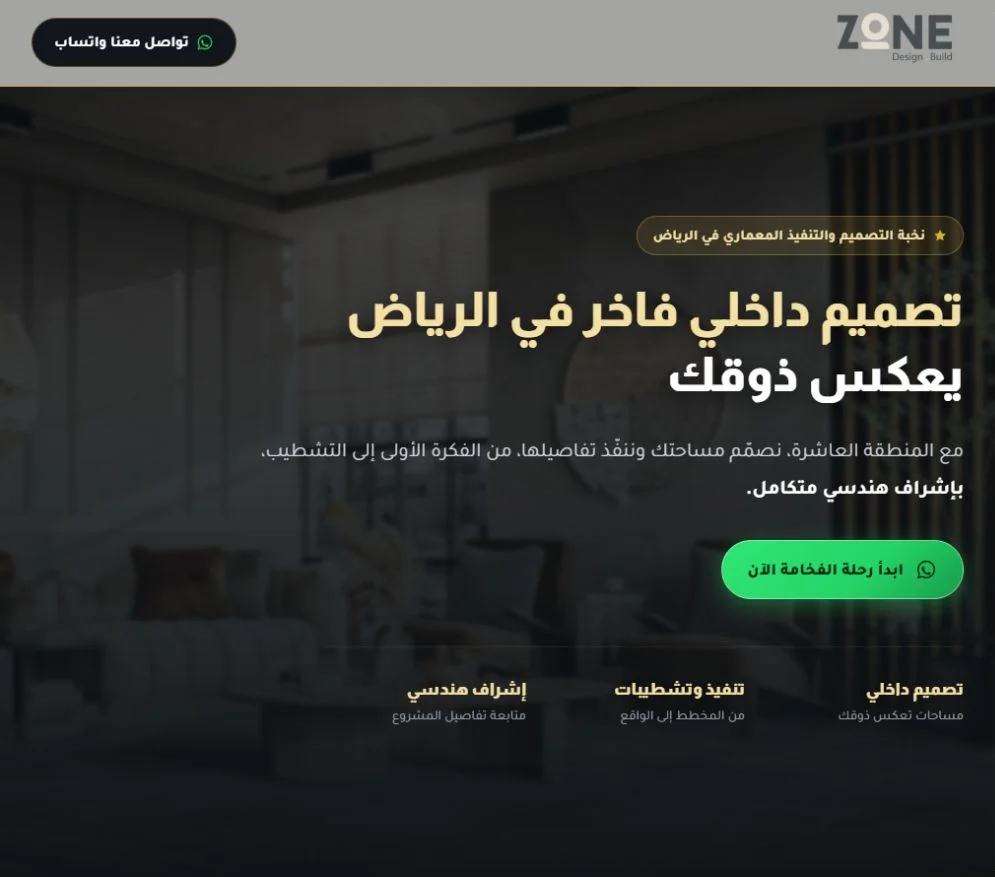
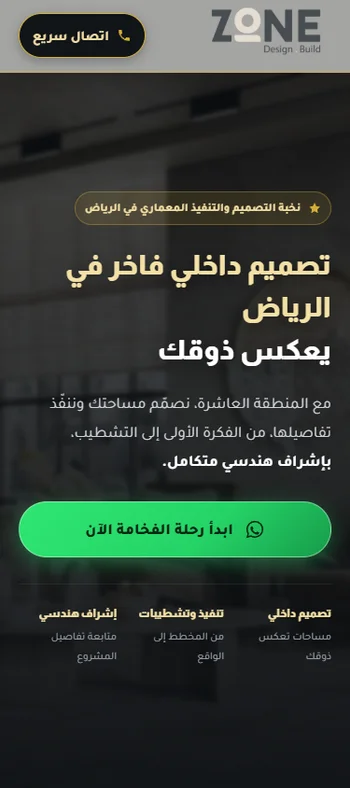
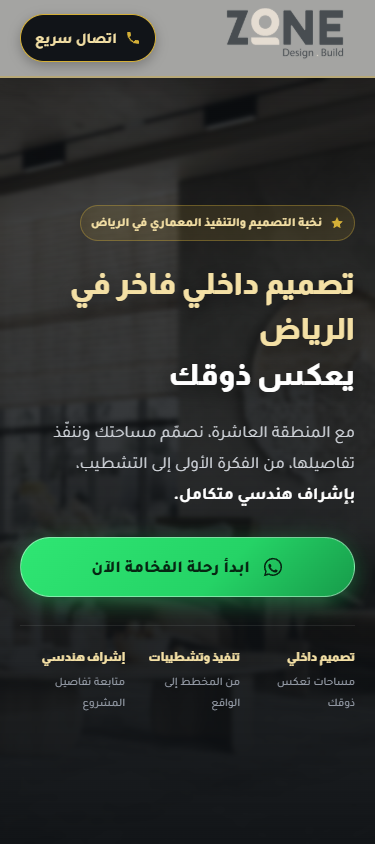
Interior design and fit-out decisions involve a discussion about the space, requirements and budget. I made calls and WhatsApp the primary page actions, giving visitors a direct route to the sales team.
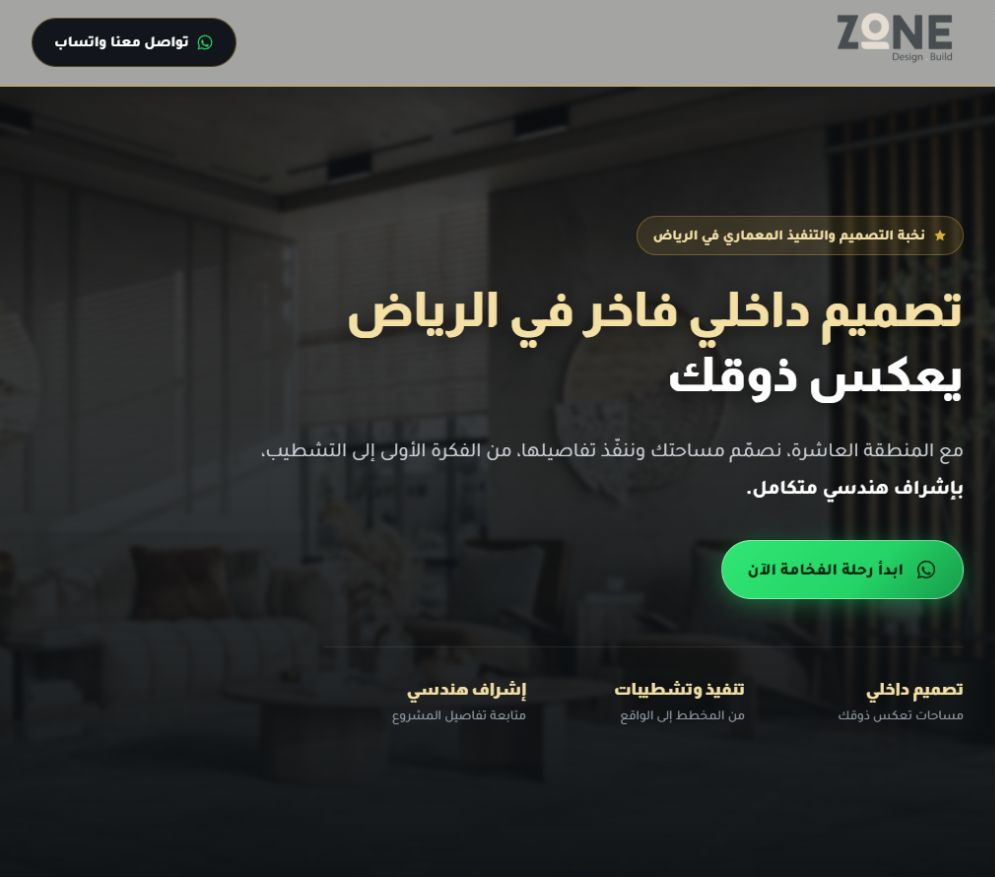
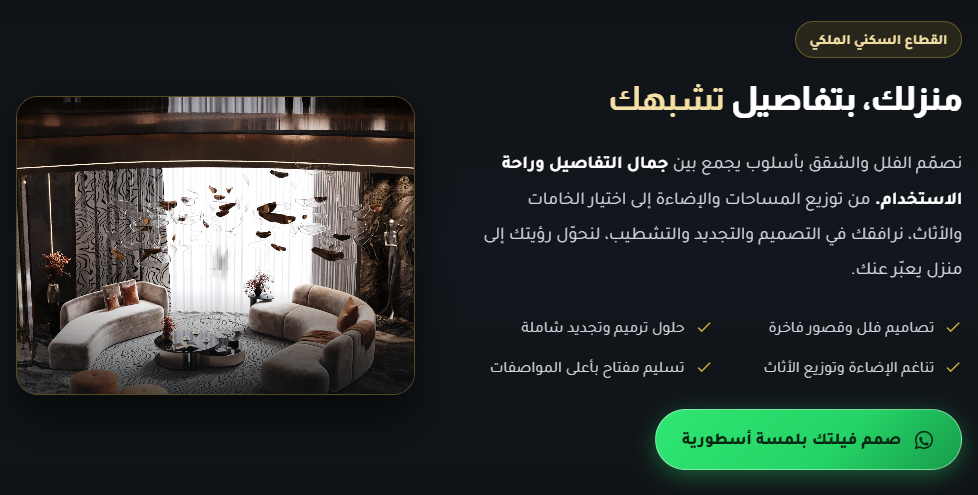
I wrote, designed and built the landing pages, aligning the offer with the service and audience. The mobile version kept those contact options easy to reach as visitors considered the proposition.
 View full image
 View full image
 View full image
I set up Google Tag Manager, GA4 and Microsoft Clarity, and used ValueTrack parameters to connect campaign and keyword information with on-site behavior. That gave optimization a view of what happened after the ad click.
An early measurement window informed the expansion
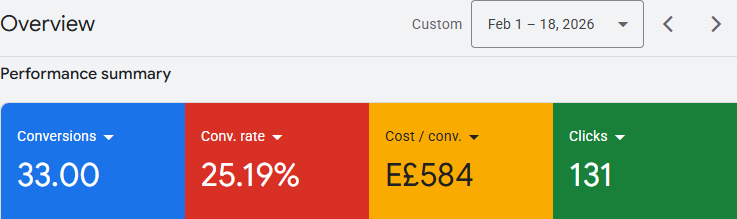
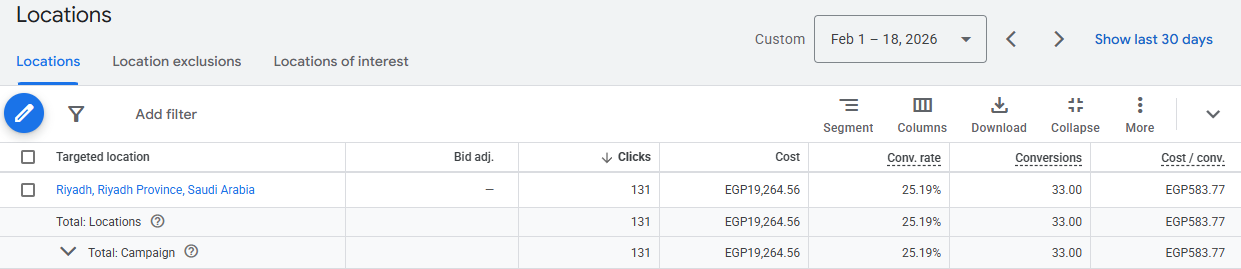
For the campaign shown, February 1–18, 2026 produced:
| Metric | Result |
|---|---|
| Clicks | 131 |
| Recorded conversion actions | 33 |
| Conversion rate | 25.19% |
| Cost per conversion action | SAR46.57 (US$12.42) |
Conversion actions track interactions with the call and WhatsApp buttons. The reports come from an Egyptian billing account; amounts here are shown in SAR and USD.
 View full image
 View full image
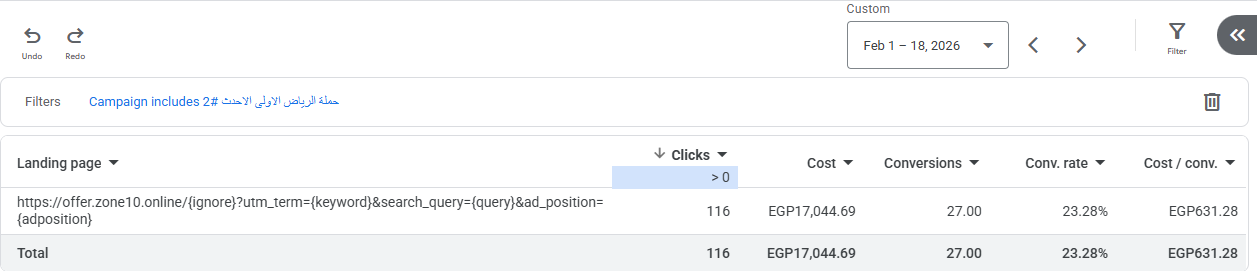
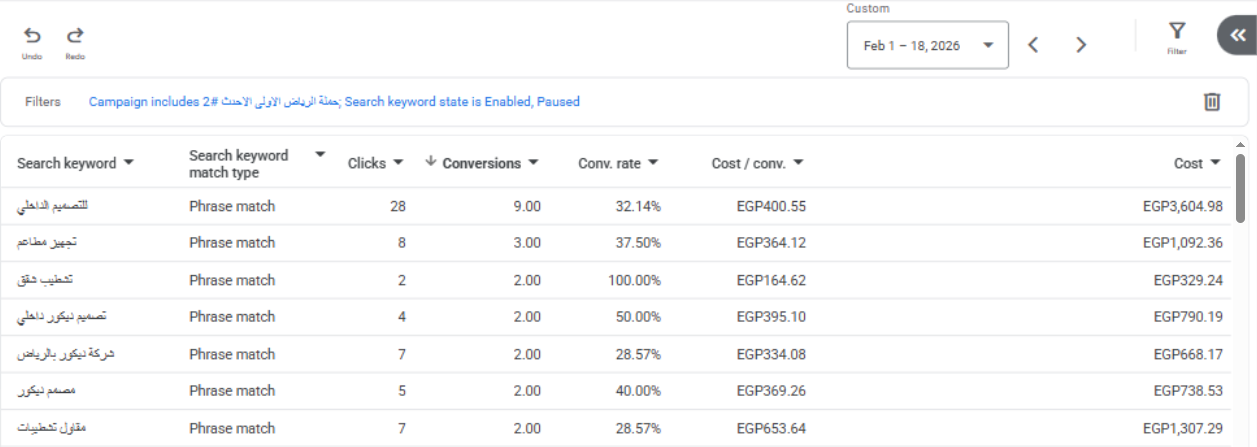
The detail helped explain the response:
- The primary landing page recorded 27 conversion actions from 116 clicks, a 23.28% conversion rate.
- The phrase-match keyword “التصميم الداخلي” recorded 9 conversions from 28 clicks, a 32.14% conversion rate, at SAR31.95 (US$8.52) per conversion.
 View full image
 View full image
That evidence supported developing more specific campaigns, messages and pages for different audience segments. The project expanded to 4 campaigns and 4 landing pages.
Filtering search intent before spending on it
Interior-design searches came from people with different needs: hiring a provider, learning a skill, finding a job or choosing software. Separating those intents was one of the project’s main challenges.
I built negative-keyword lists covering searches for:
- Free services and resources.
- Courses and training.
- Jobs and employment.
- Software and tools.
Search-term reports guided ongoing updates to those lists. The aim was to direct the budget toward people looking for the design and fit-out services the company actually offered.
I also adjusted bids, budgets, ads and page elements according to traffic relevance and conversion performance. Broad, phrase and exact match each had a place where appropriate, informed by the search intent and campaign results.
Acquisition paced to the work the company could take on
The engagement ran from December 2025 to April 2026, with 2 months of active advertising in total, spread across separate periods. When the company had enough client work to fill its capacity, we paused the campaigns. We restarted them when it could take on new projects.
Campaign timing followed a commercial decision: generate new demand when the business had room to serve it.
What the business gained
Zone10 had a working Google Search acquisition channel, supported by dedicated messaging, pages and a measurement setup for further improvement.
Across those active periods, I managed more than SAR15,000 (US$4,000) in ad spend across 4 campaigns. More than 350 people contacted the business through this acquisition setup.
6% of the people who contacted the business became clients.
My responsibility covered the connected journey. When performance pointed to an issue, I could work on the keyword, ad, page or measurement, then follow the decision through the same acquisition setup.
Another approach to capturing search demand
For Sorouh Eastern Contracting, I worked on the organic side: deciding which service and location pages to build, how they fit together and how contact actions would be measured.